broken altar
(isolation of father)
INSTALLATION | BUDAPEST_2026
Broken Altar is an ongoing series exploring inherited values, spatial memory, and the emotional weight of dysfunctional domestic environments. Throughout the series, the dining table , a traditional symbol of family, care, and togetherness, is transformed into a site of tension, reflection, and emotional negotiation. Drawing from personal experience, the work considers how inherited patterns of behaviour, silence, and trauma are transmitted across generations, while extending these intimate experiences toward broader social, political, and cultural realities.
Isolation of Father is the latest chapter within the series, focusing on the figure of the father as both an individual and a product of his social environment. Rather than presenting him solely as an authority or source of conflict, the installation explores the complexity of emotional isolation, suppressed vulnerability, and the inherited expectations of masculinity within a post-communist Eastern European context.
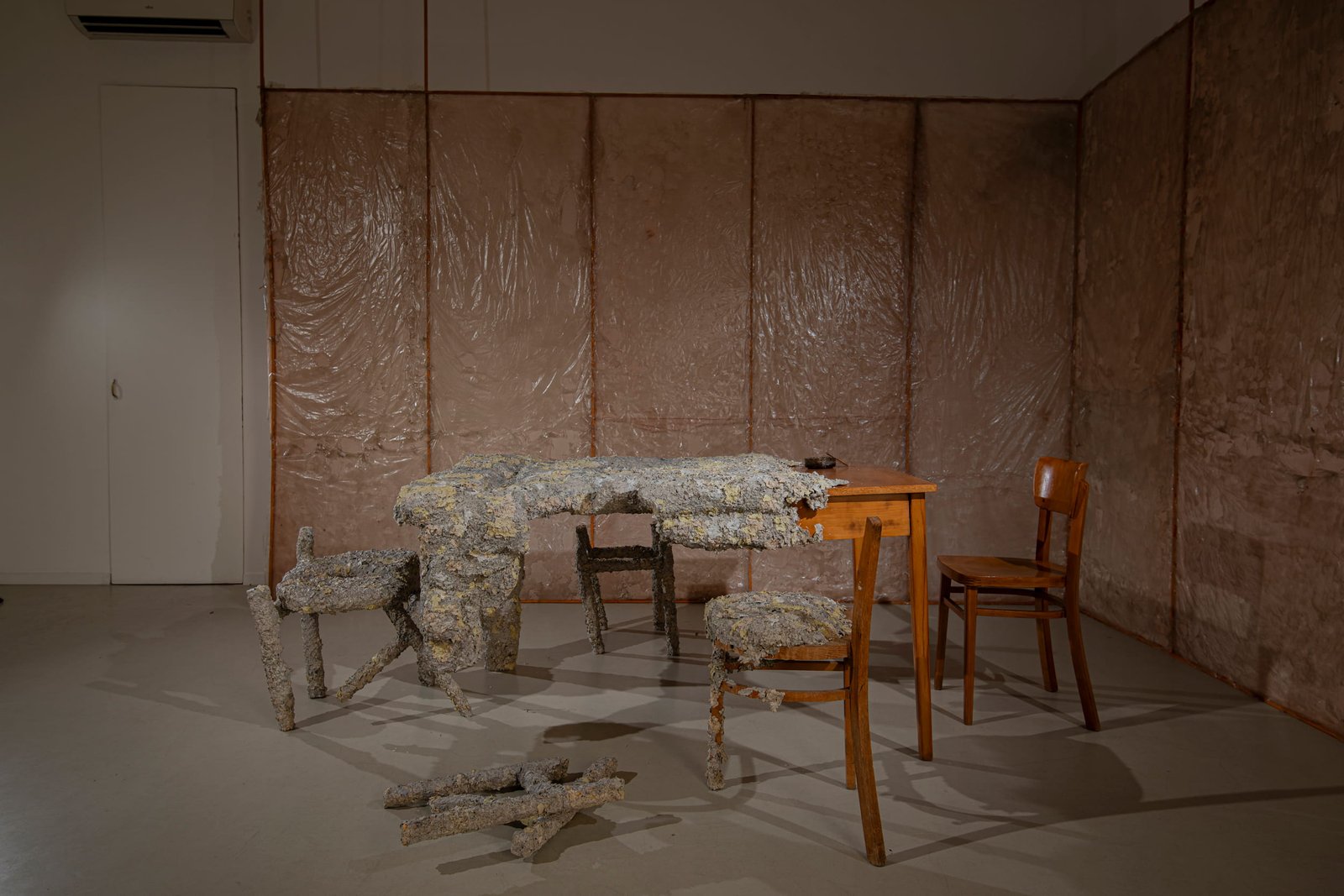
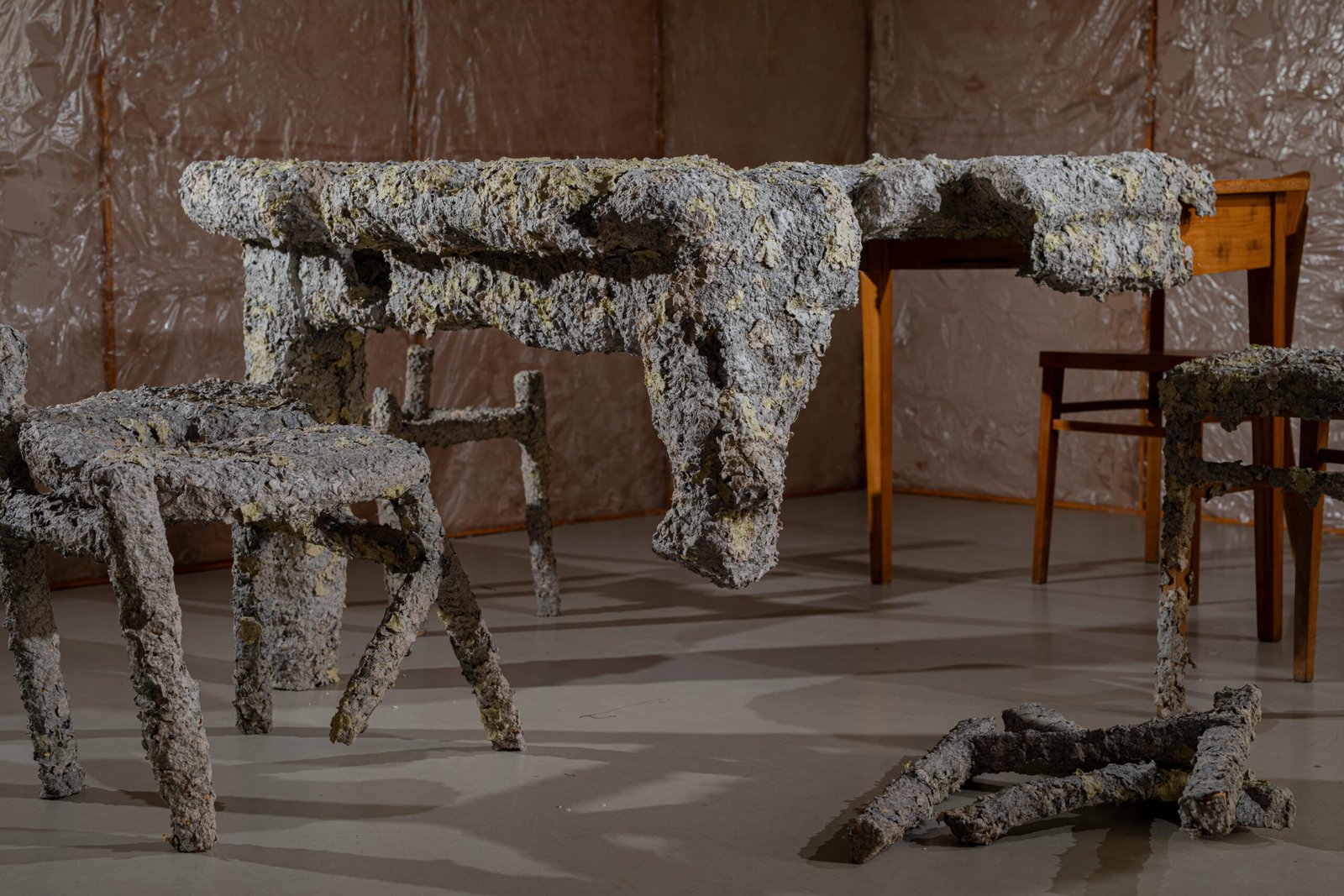
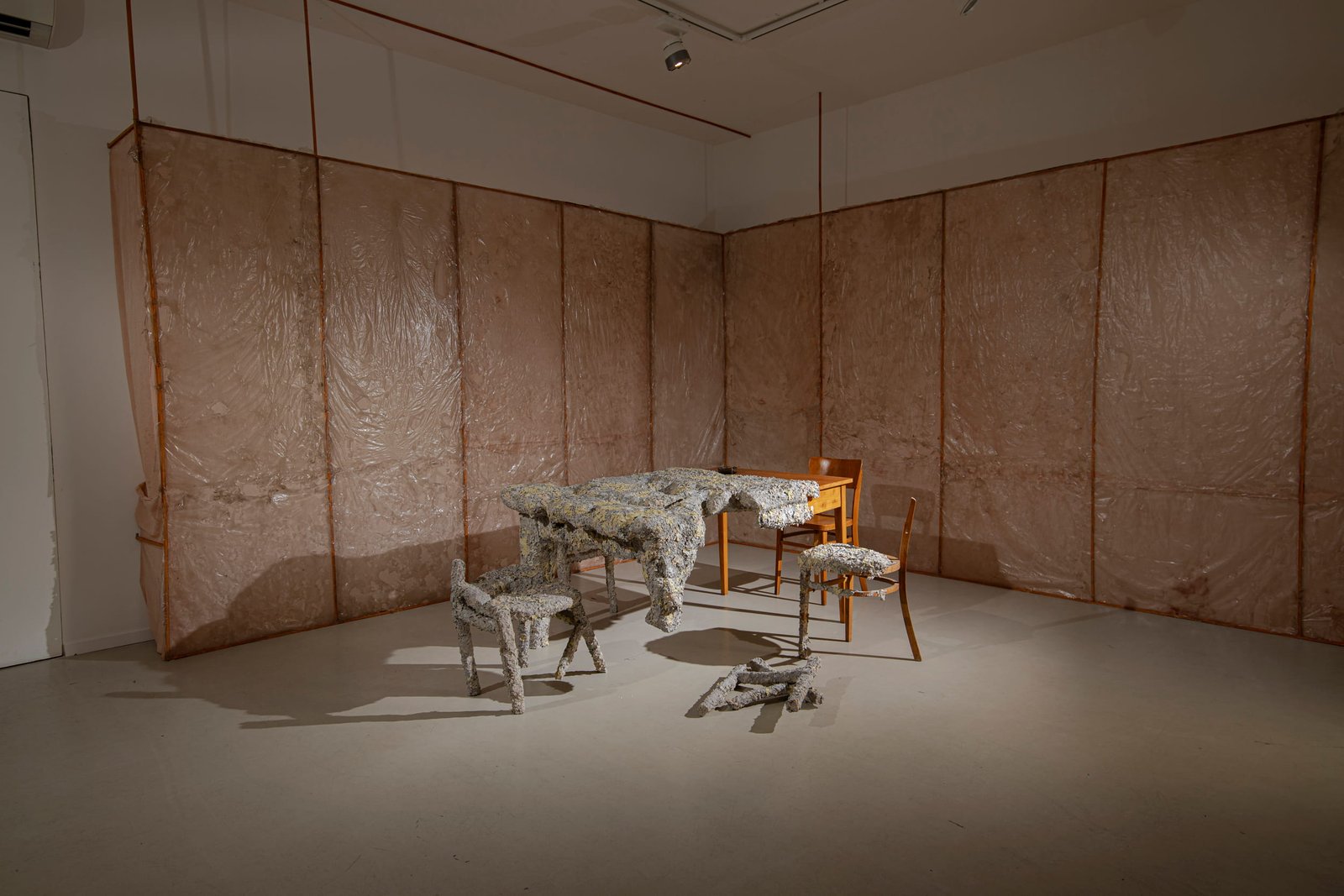
The installation unfolds as an atmospheric domestic landscape centred around a dining table. While the table bears the visible traces of decay, the father's seat remains intact, physically and metaphorically separated from the deterioration surrounding it. This spatial relationship reflects the paradox of emotional withdrawal: a form of self-protection that simultaneously shapes, destabilises, and reverberates throughout the family.
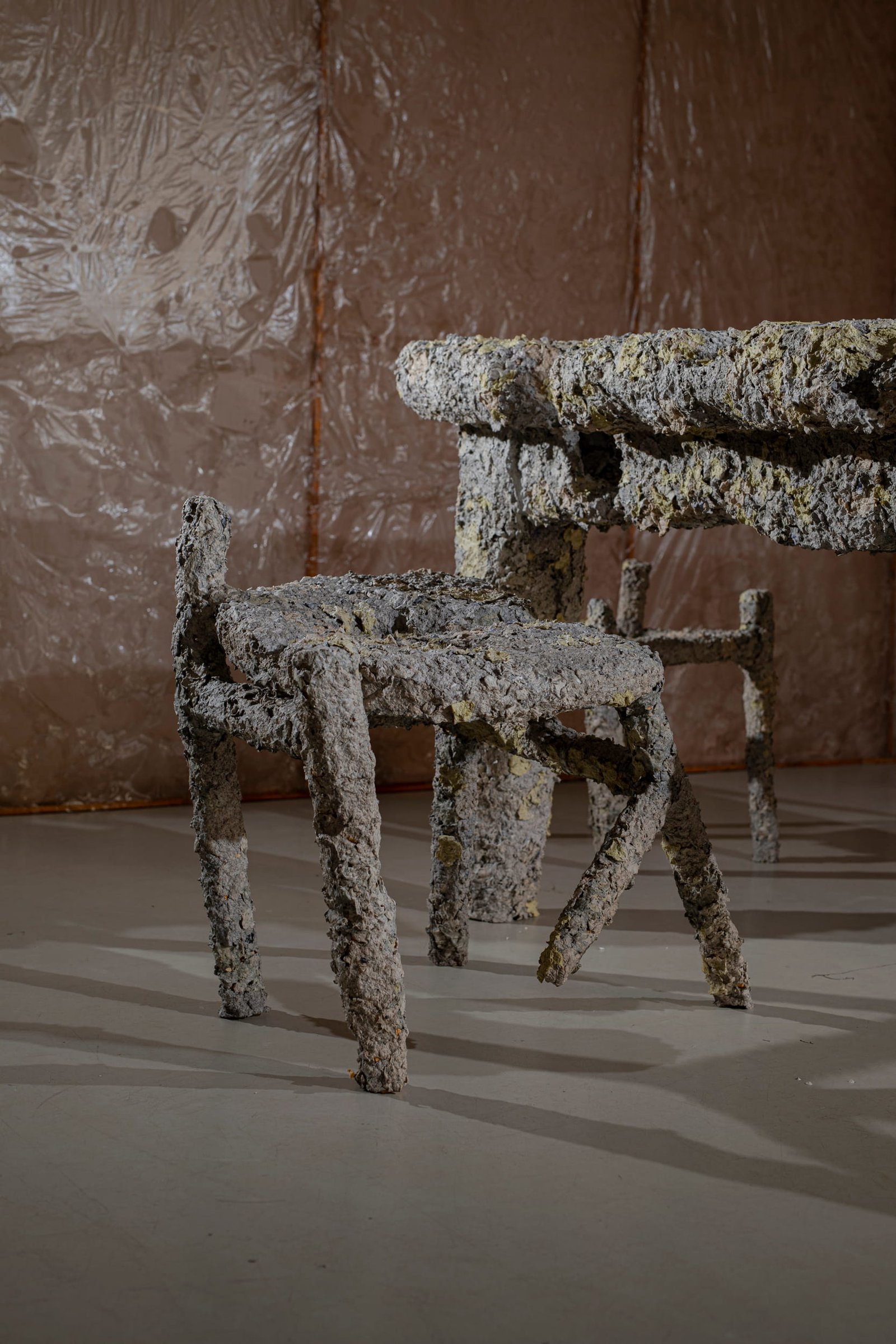
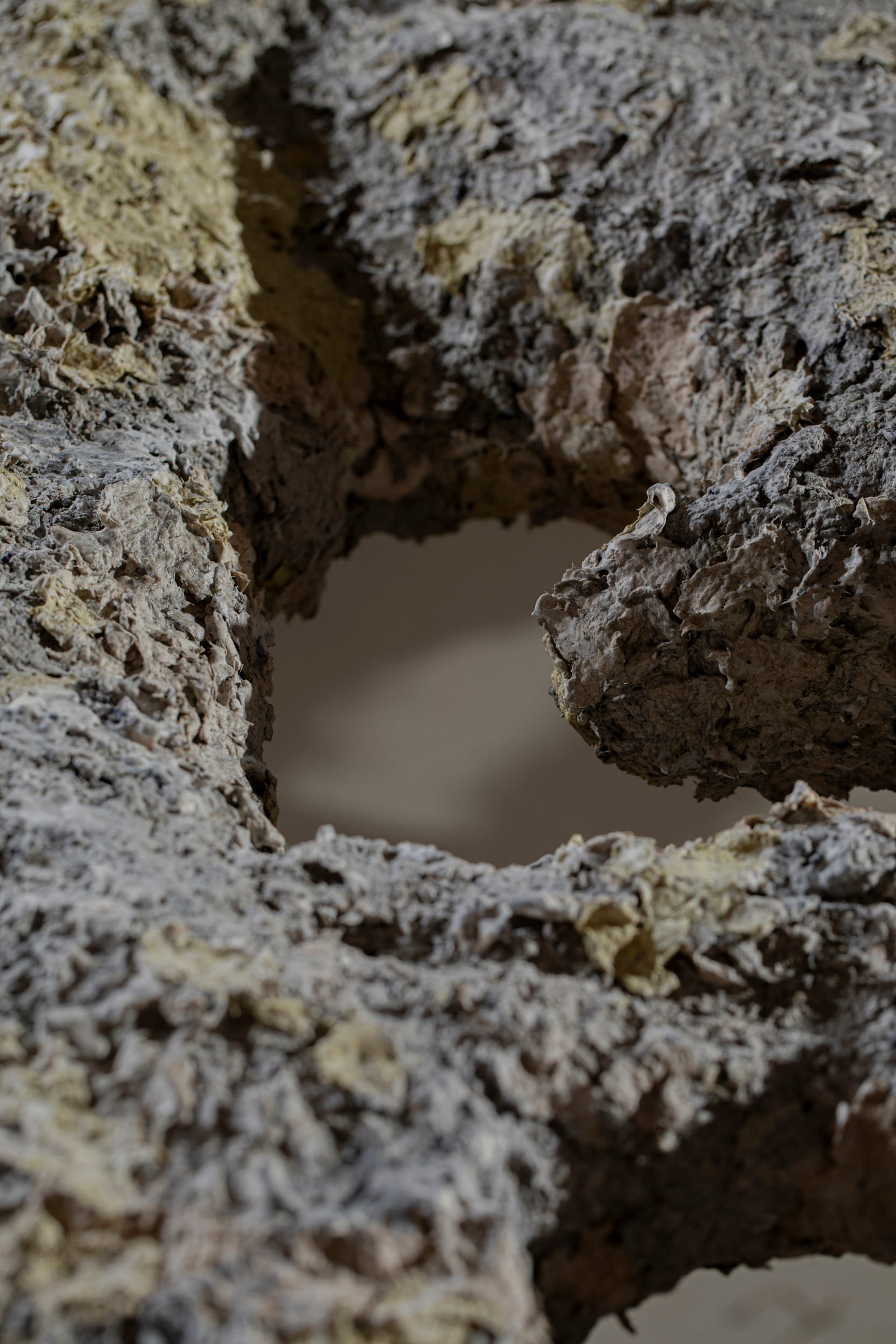
Surrounding architectural elements evoke an interior in a state of quiet transformation, where familiar boundaries become unstable and domestic space itself appears fragile. Rather than illustrating memory, the installation seeks to embody it, translating psychological and emotional experience into a physical environment that visitors navigate with their own bodies.
Operating between personal testimony and social reflection, Broken Altar: Isolation of Father invites viewers to consider how emotional patterns are inherited, how silence becomes embedded within family structures, and how private experiences are inseparable from the wider cultural systems that produce them.
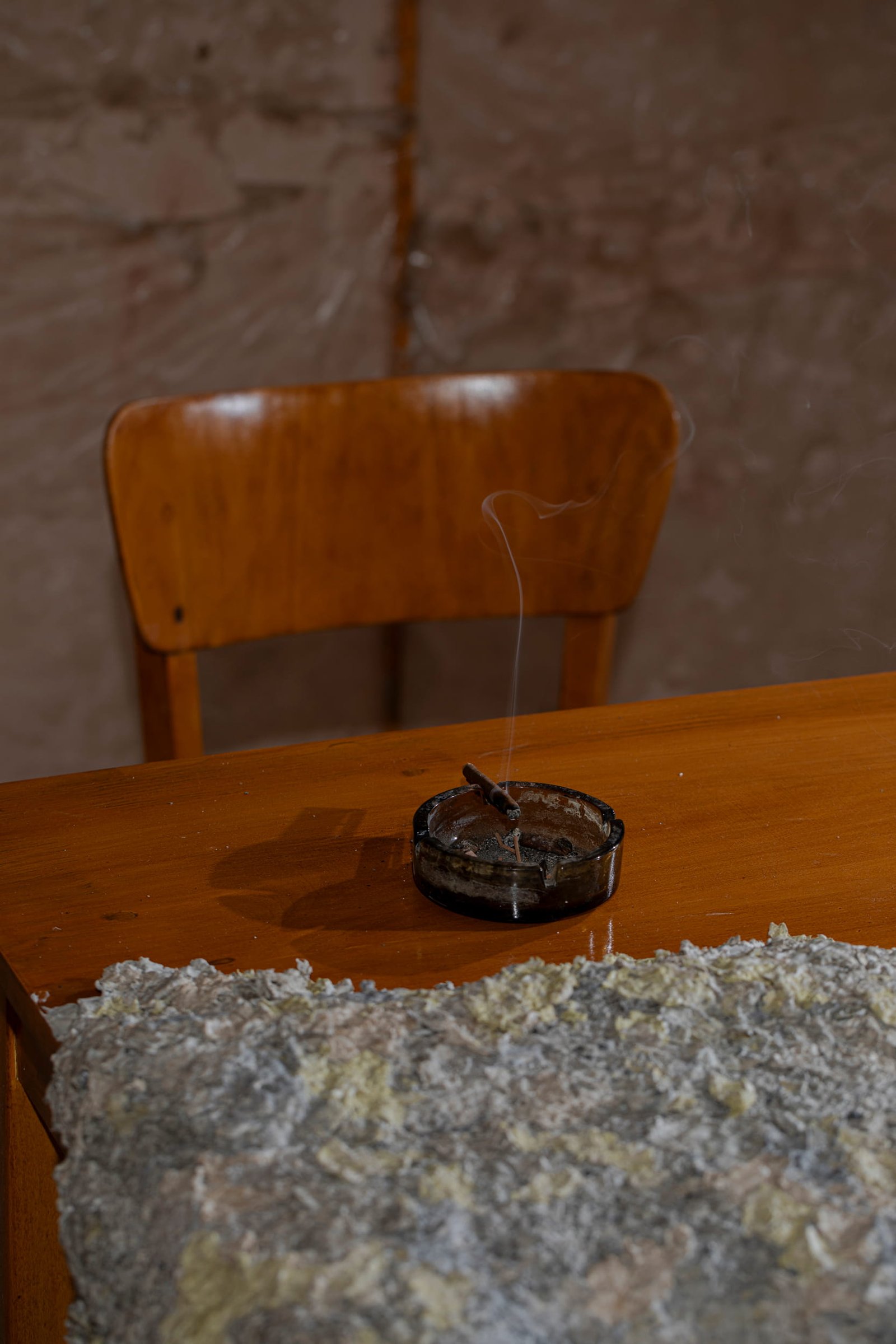
Olfactory / Visual Element — Cigarette
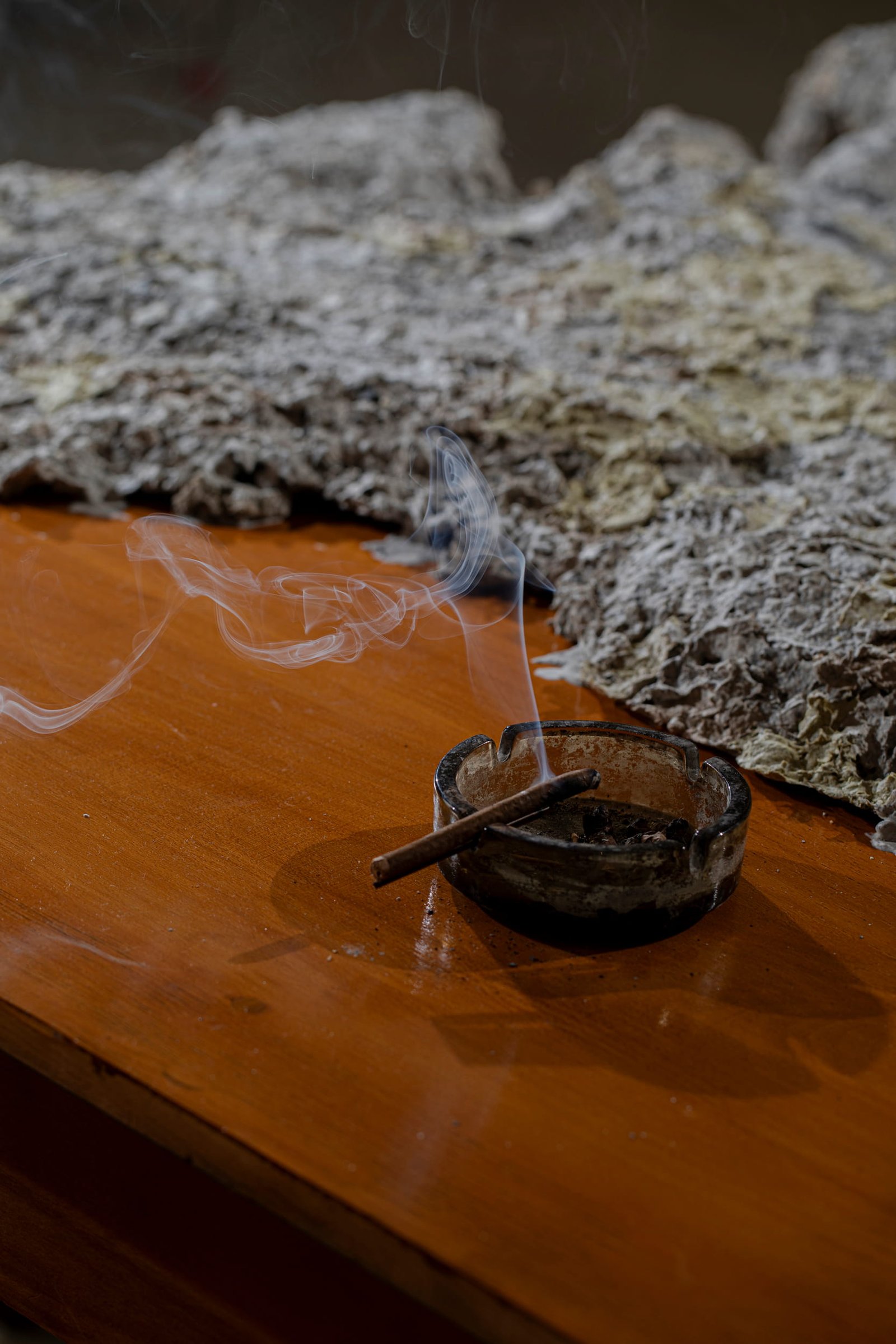
An ashtray with a lit cigarette introduces a fleeting sense of presence within the installation. The cigarette does not produce tobacco smoke; sandalwood incense is used instead, creating an olfactory atmosphere distinct from the visual gesture of smoking. The lit cigarette and drifting smoke evoke the father as an absent presence, someone who has momentarily left the table, yet whose presence continues to inhabit the space.
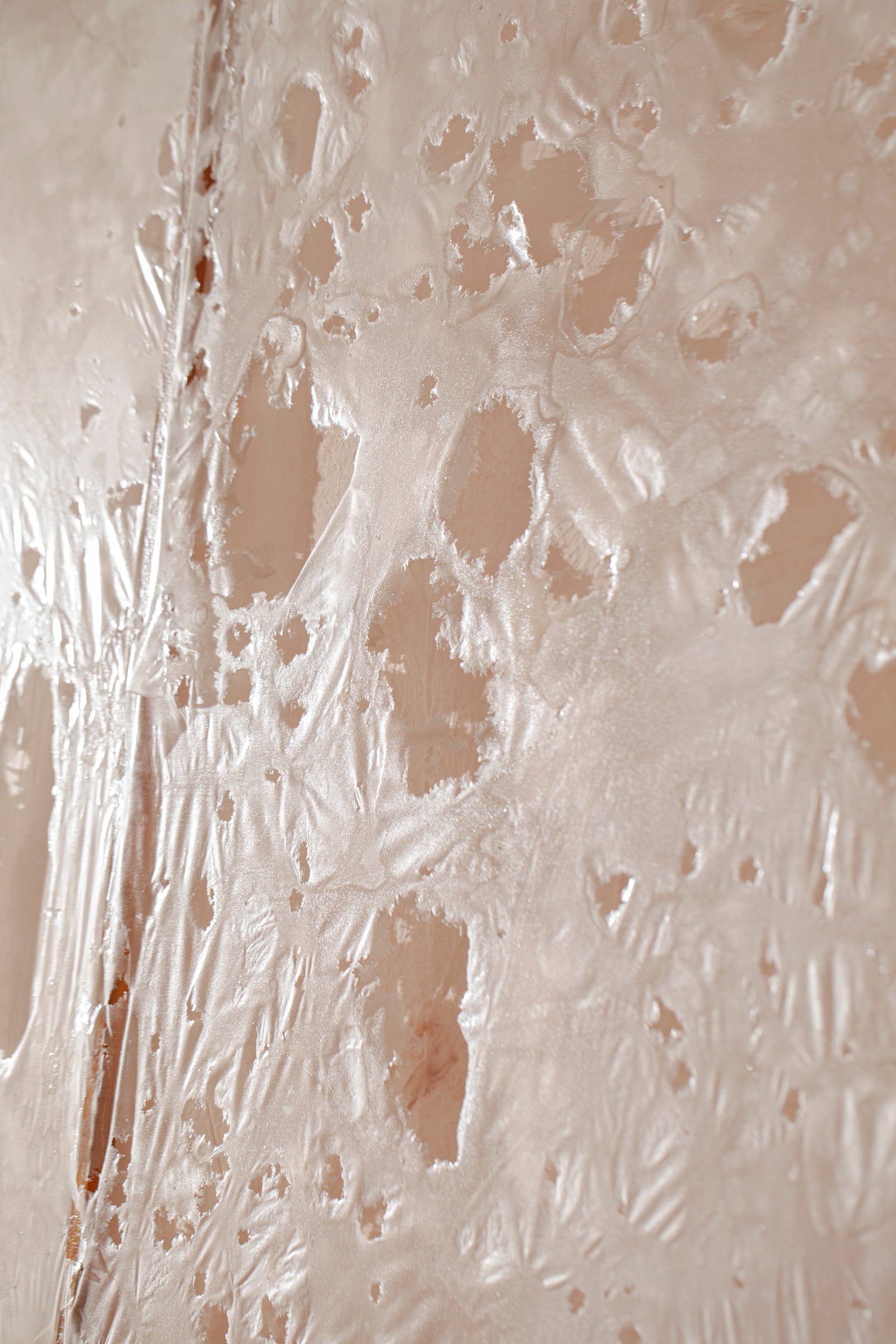
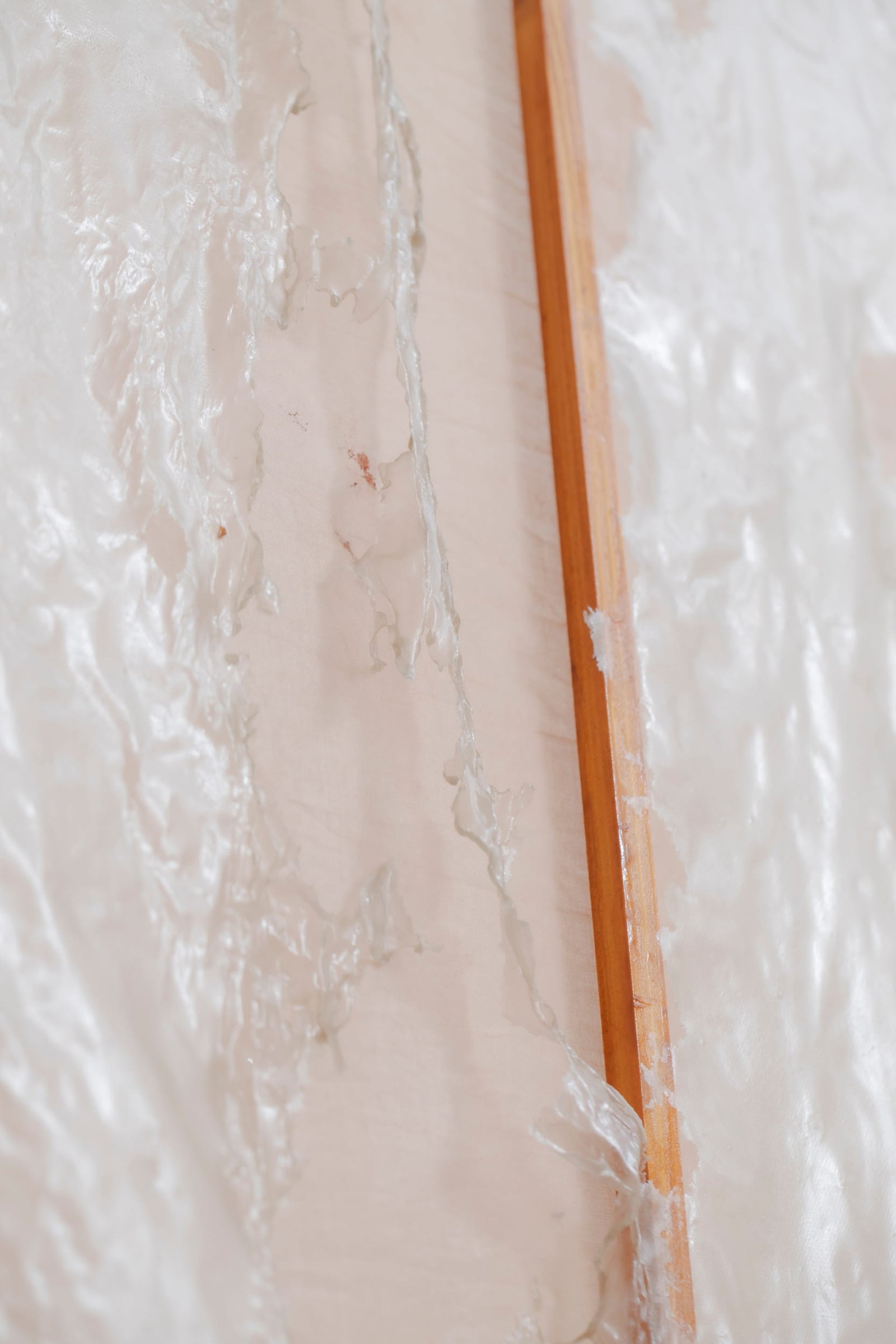
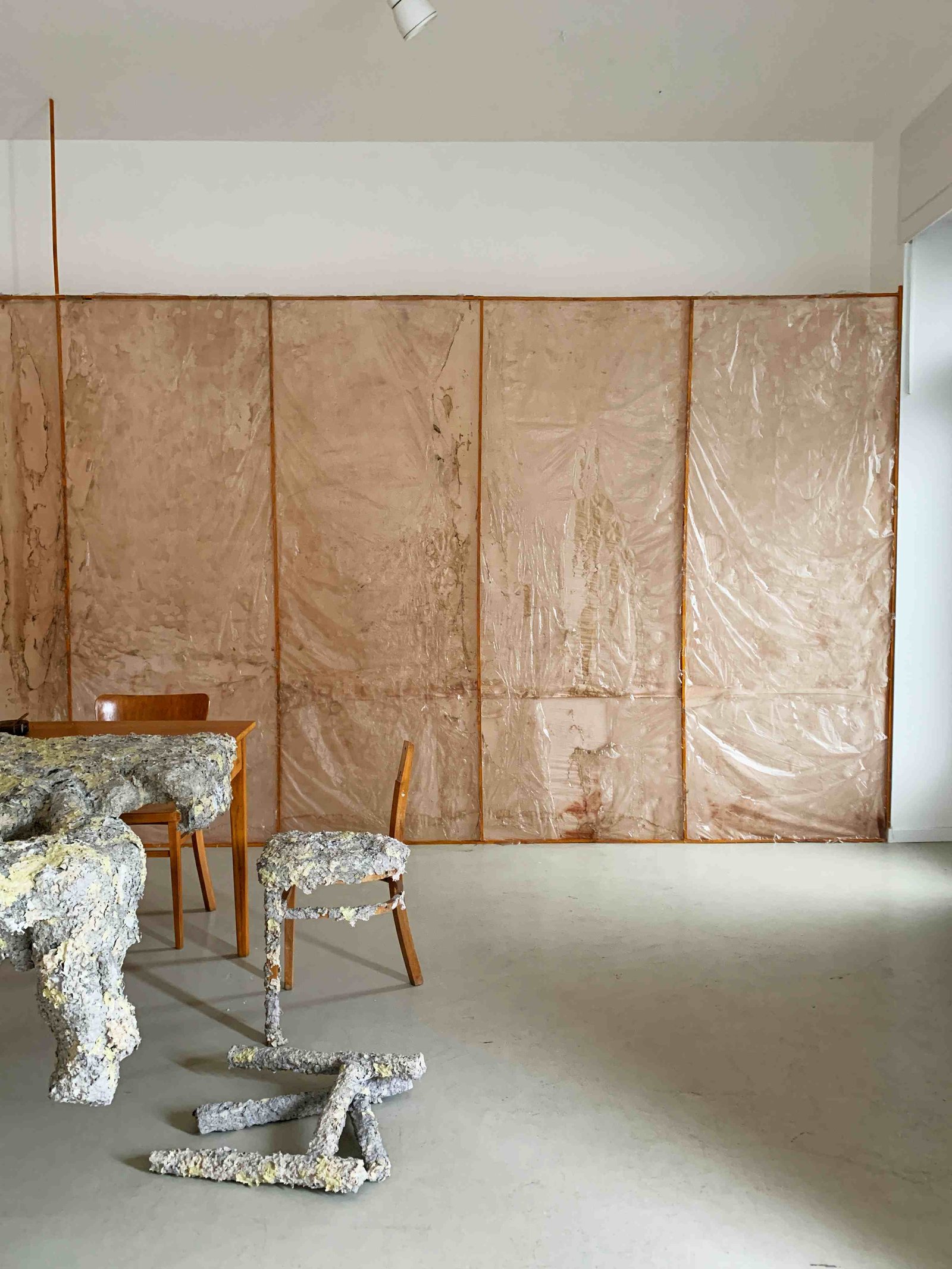
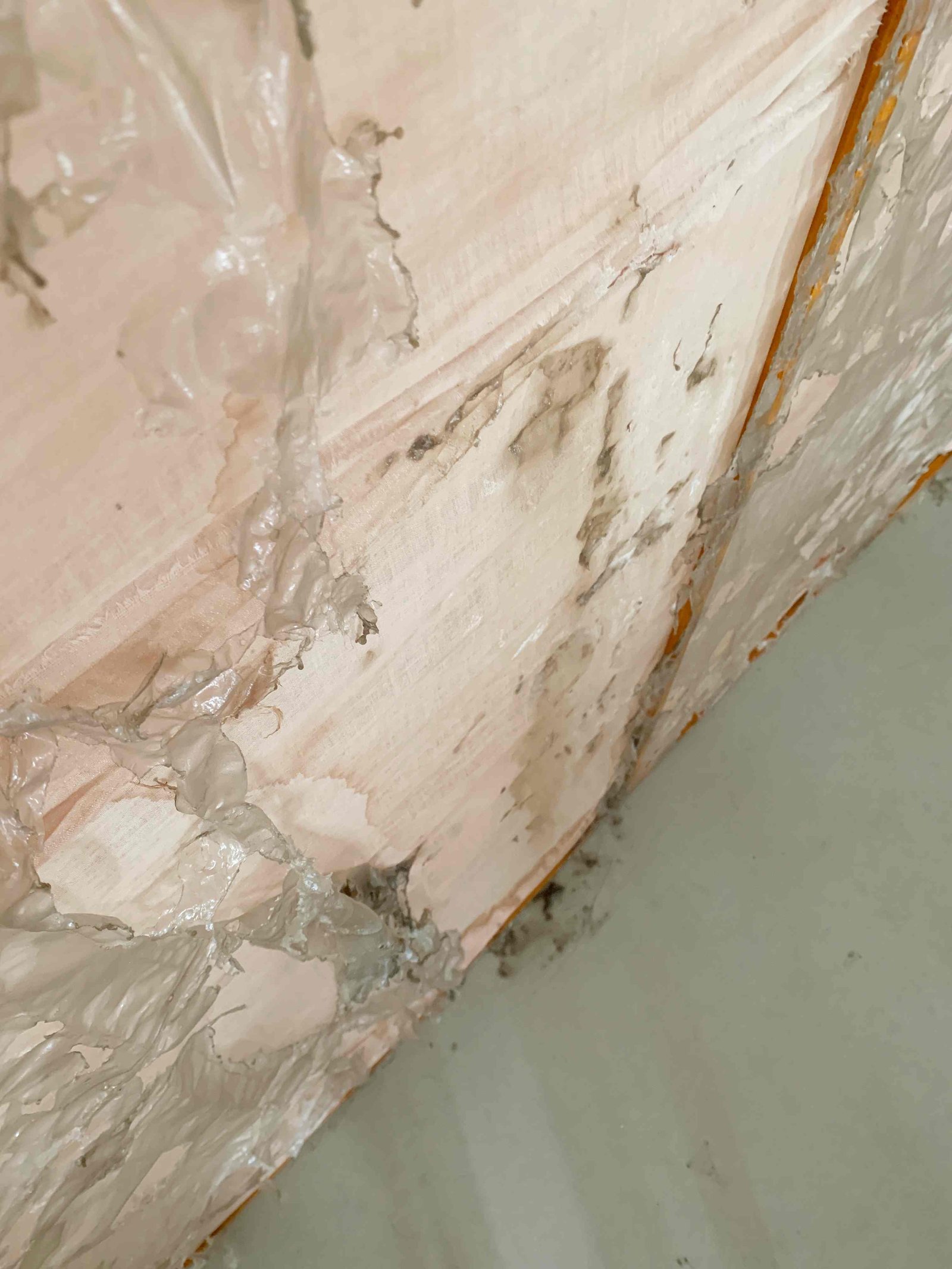
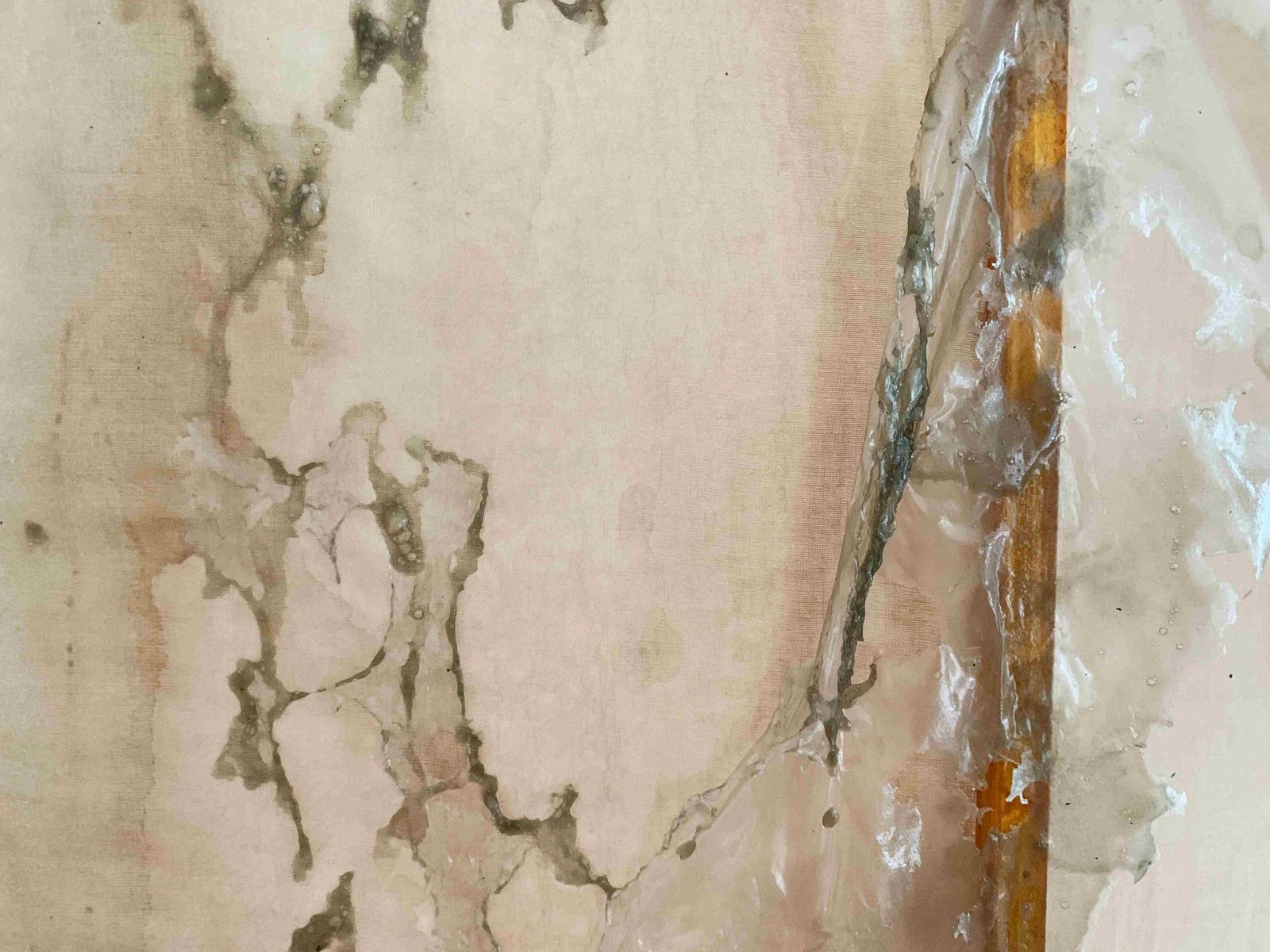
Ephemeral Spatial Membranes
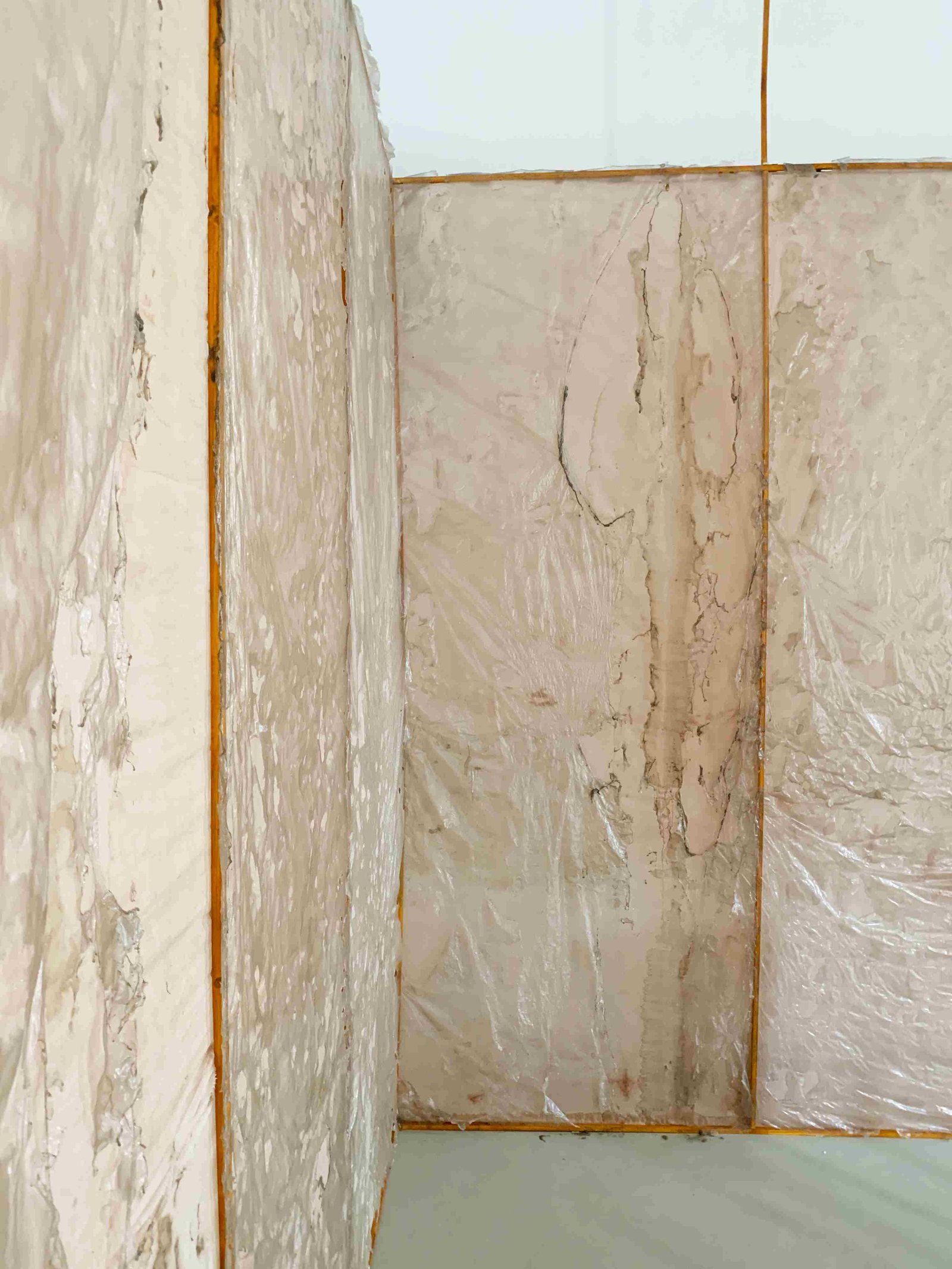
Two wall-like structures behind the table are covered in layered, water-soluble membranes that are gradually dissolved by subtle points of moisture. The translucent, mucous-like surface transforms the domestic space into something fragile and unsettled—as if the environment itself has become affected by the dysfunction within it. The slow deterioration remains almost imperceptible, suggesting how emotional tensions can quietly alter the perception of home over time.
Taste Element — Hard Candy
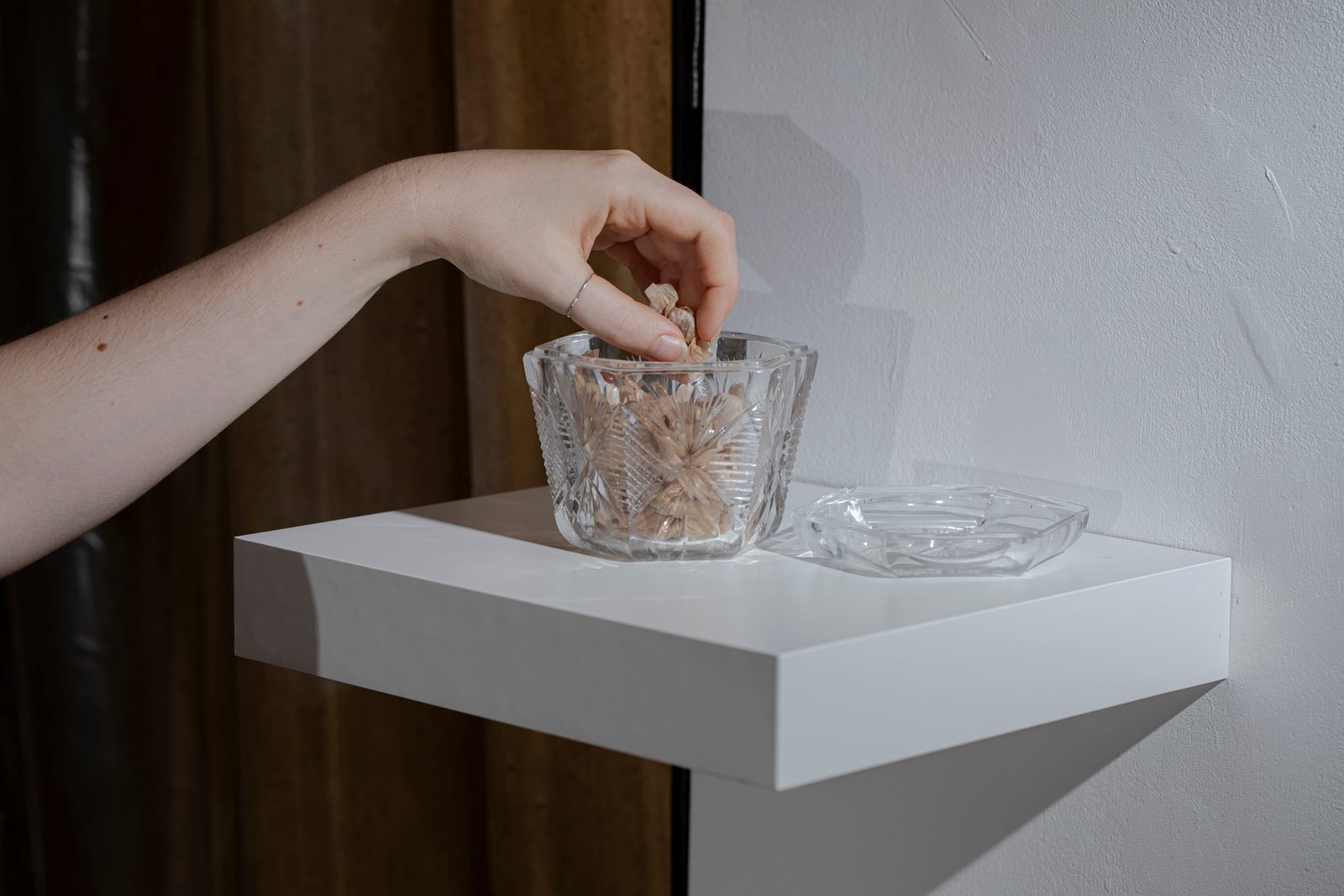
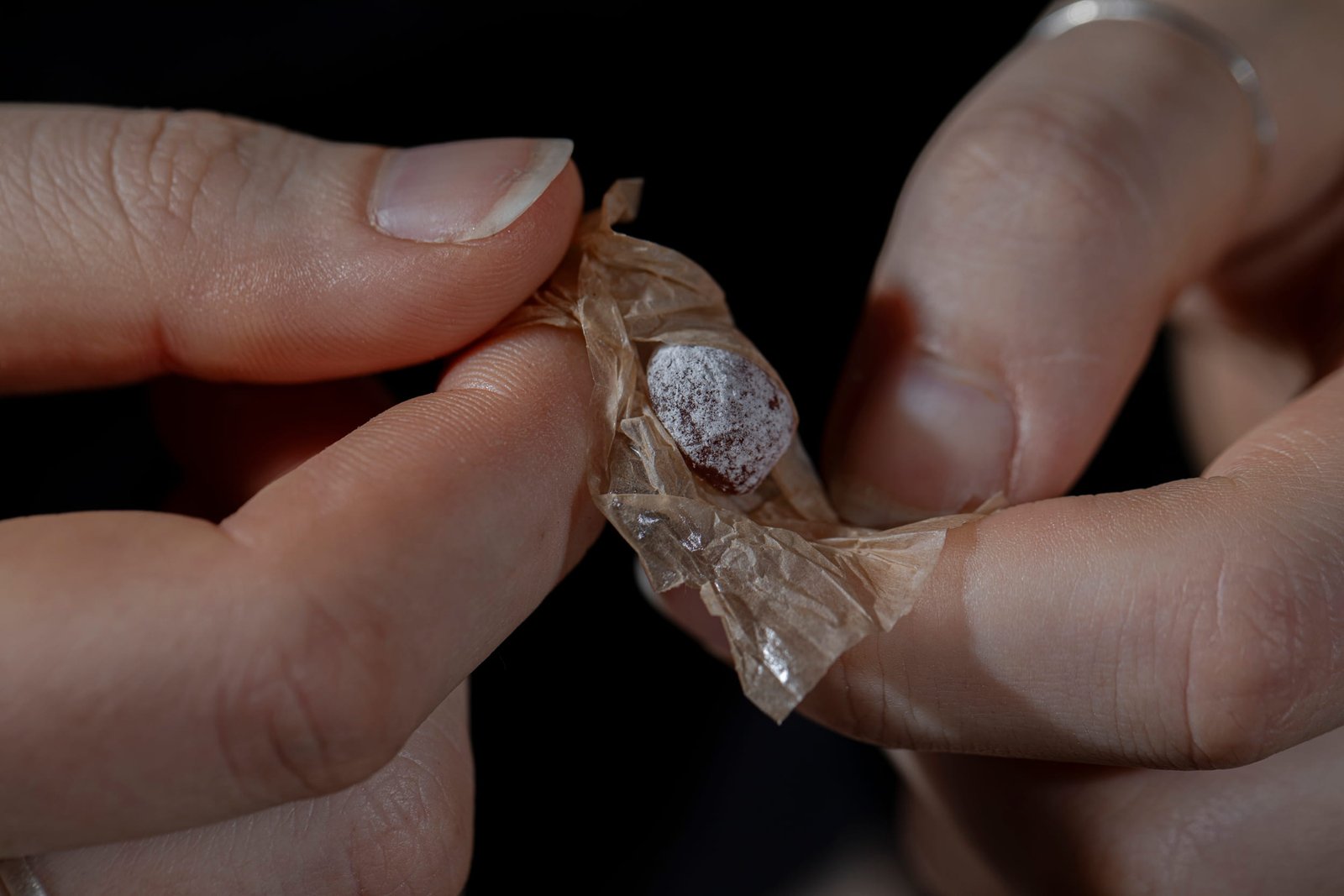
A hard candy offered to visitors upon entering the installation, served from a vintage crystal jar. Its rough texture echoes the decaying surface of the table, while layers of burnt sugar, black tea, roasted grain, and dried plum move from nostalgic familiarity toward unexpected flavour. The candy brings the body into the present through taste, touch, and scent.
Sound
The sound work extends the figure of the father beyond the visible space of the table. A high-viscosity liquid flowing and dripping is layered with the sounds of coughing, sighing, and the rhythm of inhalation and exhalation. Heard from elsewhere in the space, the sound suggests the father’s presence in another room, creating an intimate sense of proximity, distance, and unseen activity.
„We are all the leftovers of a feast at which our parents had their fill.” Eszter Babarczy: Apám meghal (Jelenkor, 2025)
A feast where the table, as a silent witness, becomes the familiar yet unfathomable stage of family life. An object that preserves the imprint of our memories: who sits where, who speaks to whom, who places something on the table or takes something from it, and how each person relates to the others and the events that shape everyday life. A space where gestures, phrases and silences are layered upon one another across generations. A memento that reminds us that physical proximity does not necessarily imply emotional or mental presence.
Drawing on this experience, Barbara Gocníková's Broken Altar series brings into focus the family, its inherited patterns and its underlying power dynamics within the exhibition space. Her lyrical and deeply personal visual language intertwines with the imprint of an era, allowing the symptoms of a dysfunctional family structure to resonate with the broader historical experience of Eastern Europe. In Broken Altar: Isolation of Father, presented at Liget Gallery, the figure of the father and his relationship to the rest of the family become the central subject of the work.
The installation inhabits the gallery as if it were a dying body. The table, already overtaken by decay, exists in an isolated relationship to the family patriarch's designated chair, which observes the unfolding events from a closed and detached position. But the decay does not reach him, his isolation does not free him from what unfolds around him; instead, it places him in direct opposition to it. This contrast reveals the father’s emotional and relational absence: a male role, often inherited across generations, in which practices of emotional distance, silence and conflict avoidance have become an integral part of family dynamics.
The relationship between the viewer and the artwork occupies a central place in Gocníková's artistic practice. Rather than producing autonomous objects, her installations create multisensory environments in which taste, smell, sound and visual elements are woven together into a single experiential field. Within this space, the viewer becomes an active participant rather than a passive observer. Personal and collective memory converge at the familiar, yet ultimately inexplicable, intersection of the senses.
Ágnes Keszegh (curator)
location: Liget Gallery,Budapest
curator: Ágnes Keszegh
photography: Barnabás Neogrády-Kiss
communication and support: Liget Gallery